
Introduction: Who Was Barabbas?
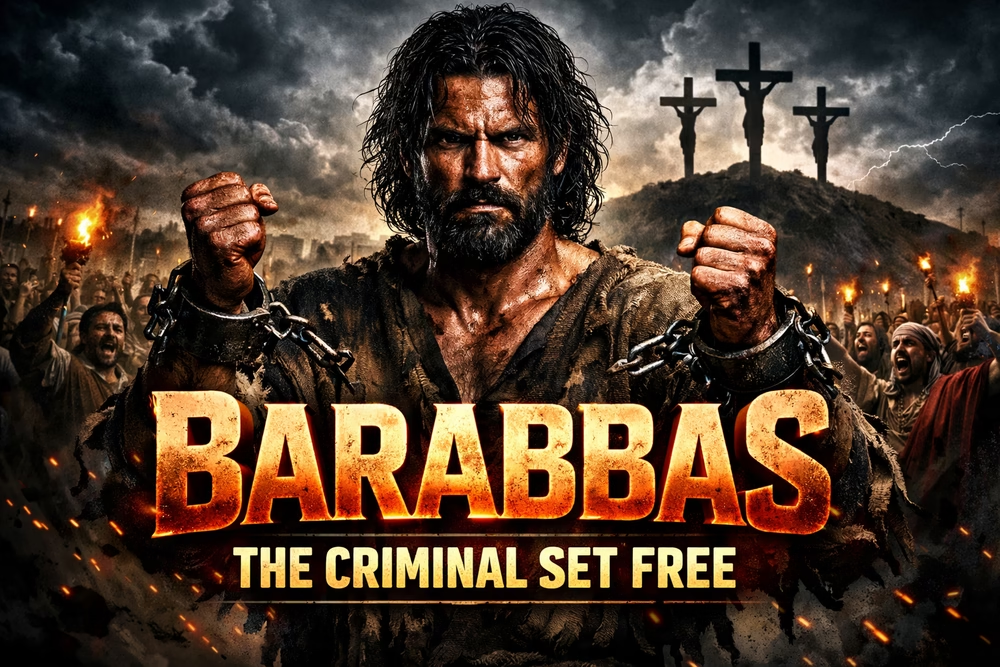
The story of Barabbas is one of the most intriguing and controversial narratives in Christian history. This criminal figure appeared during the trial of Jesus Christ before Pontius Pilate, playing a crucial role in one of the most pivotal moments in religious history. Understanding the story of Barabbas helps us grasp the complexities of the New Testament and the events surrounding the crucifixion of Jesus.
In this comprehensive guide, we will explore who Barabbas was, what he did, and why his release had such profound theological implications for Christianity.
Who Was Barabbas? The Historical Context
The Name and Identity of Barabbas
The name “Barabbas” comes from Aramaic and literally means “son of the father” (bar = son, abba = father). This ironic name becomes even more significant when contrasted with Jesus Christ, who is believed by Christians to be the true Son of God. Some manuscripts suggest his full name may have been Jesus Barabbas, adding another layer of complexity to the narrative.
Barabbas was a notorious prisoner held in custody by the Roman authorities in Jerusalem during the first century. According to biblical accounts, he was not a simple criminal but rather an individual involved in serious offenses.
What Crimes Did Barabbas Commit?
The Gospel accounts describe Barabbas’s crimes in varying degrees of detail:
- Insurrection against Rome: He was involved in an uprising against Roman occupation, making him a political prisoner and potential rebel.
- Murder: Multiple Gospel accounts mention that Barabbas committed murder, indicating he was a violent criminal.
- Robbery: Some versions of the story reference theft or banditry as part of his criminal activities.
- Sedition: His actions were considered threats to Roman authority and public order in Jerusalem.
These serious charges made Barabbas a dangerous and condemned man, worthy of execution under Roman law.
The Trial of Jesus and the Choice of Barabbas
The Custom of Releasing a Prisoner
During the Passover festival in Jerusalem, there was a Roman custom that allowed the governor to release one imprisoned person as a gesture of goodwill to the Jewish population. This practice was meant to foster positive relations between the Roman occupiers and the local population.
When Jesus was brought before Pontius Pilate, the Roman prefect found no fault in him. However, the Jewish religious authorities and the gathered crowd demanded Jesus’s crucifixion. Pilate, seeking a way out of the dilemma, offered the crowd a choice: he could release either Jesus of Nazareth or Barabbas.
The Pivotal Decision: The Crowd’s Choice
In what would become one of history’s most dramatic moments, the crowd chose to release Barabbas and demanded the crucifixion of Jesus. This decision is recorded in all four Gospel accounts:
- Matthew 27:15-26: Detailed account of Pilate’s offer and the crowd’s choice
- Mark 15:6-15: Similar narrative with emphasis on the crowd’s demand
- Luke 23:18-25: Account highlighting Pilate’s reluctance
- John 18:39-40: Gospel version mentioning Barabbas as a “robber”
This historical moment reveals the fickleness of public opinion and the power of collective decision-making, even when directed toward an unjust outcome.
Theological Significance of Barabbas’s Release
Symbolism in Christian Theology
The story of Barabbas holds profound theological meaning for Christian believers. Many scholars and theologians interpret his release as highly symbolic:
Substitution and Redemption
Barabbas represents humanity in Christian theology. Like Barabbas, humans are considered sinners deserving punishment. Jesus, the innocent one, took the place of the guilty, in a metaphorical exchange that forms the basis of Christian understanding of salvation. This substitutionary theology suggests that Jesus died for the sins of all people, just as he was metaphorically replaced by Barabbas.
Justice and Mercy
The contrast between Barabbas and Jesus illustrates the tension between justice and mercy. Barabbas, guilty and condemned, received mercy and freedom. Jesus, innocent and pure, received punishment and death. This paradox highlights themes central to Christian faith about divine mercy overcoming human judgment.
Historical Perspectives and Scholarly Debate
Questions About Historical Accuracy
Modern scholars have raised important questions about the historical reliability of the Barabbas narrative:
- No Roman historical records: Barabbas is not mentioned in contemporary Roman sources, making verification difficult.
- The prisoner release custom: Historians debate whether such a Passover custom actually existed in Roman practice.
- Anti-Jewish narratives: Some scholars suggest the story may have been shaped to reflect theological concerns rather than pure historical fact.
- Gospel variations: The different accounts in the four Gospels contain minor discrepancies in detail.
The Purpose of the Narrative
Regardless of historical details, scholars agree that the story served theological purposes for early Christian communities. It conveyed messages about guilt, innocence, redemption, and the sacrifice of Christ.
What Happened to Barabbas After His Release?
The Biblical Silence
One of the most intriguing aspects of the Barabbas story is that the Bible provides no information about what happened after his release. The Gospel accounts simply state that he was freed and then disappear from historical record.
Tradition and Speculation
Various Christian traditions and apocryphal texts have speculated about Barabbas’s later life:
- Some traditions suggest he converted to Christianity after witnessing Jesus’s sacrifice.
- Others claim he returned to his criminal ways without learning from the experience.
- Certain apocryphal gospels provide fictional accounts of his eventual fate.
- Medieval Christian literature sometimes portrayed him as achieving redemption through faith.
However, these are speculative additions to the biblical narrative, not confirmed historical facts.
The Cultural Impact of Barabbas’s Story
Literature and Film
The Barabbas narrative has inspired numerous artistic and literary works:
- “Barabbas” by Pär Lagerkvist: A Nobel Prize-winning novel exploring the psychological journey of the freed prisoner.
- Film adaptations: Multiple movies have dramatized the life and release of Barabbas.
- Religious art: Countless paintings and sculptures have depicted the pivotal moment of choice.
- Musical compositions: Oratorios and sacred music have incorporated the Barabbas narrative.
Religious Teaching and Preaching
The Barabbas story remains a central theme in Christian sermons and religious education, used to teach about themes of sacrifice, redemption, and divine mercy.
Conclusion: The Lasting Legacy of Barabbas
The story of Barabbas represents far more than a simple historical anecdote. It serves as a powerful theological metaphor, a moral lesson about justice and mercy, and a pivotal moment in Christian narrative. Whether viewed from historical, theological, or literary perspectives, the tale of the criminal released instead of the innocent Jesus continues to resonate across cultures and centuries.
Key takeaways about Barabbas:
- He was a notorious criminal convicted of insurrection, murder, and robbery.
- He was released instead of Jesus during Pontius Pilate’s trial.
- His story carries significant theological meaning about redemption and substitution.
- The historical accuracy of the narrative remains debated among scholars.
- His tale has inspired countless artistic works throughout history.
Learn More About Biblical History
Explore more stories from the New Testament and deepen your understanding of early Christian history. Whether you’re interested in biblical scholarship, theology, or historical perspectives, there’s always more to discover about these ancient texts and their enduring significance.



/hotmart/product_pictures/1e8b18c6-4f99-44d6-86a8-0ae3355fac84/ChatGPTImage20dic202510_52_53.png)